

Jake
Blackpool FC x Mindframe Performance: Sport Psychology Partnership
Most academies pour everything into the physical and the technical. The running, the gym, the drills, the tactics. Then they leave the mental side to chance and wonder why their most talented players go missing when it matters.
Blackpool wanted to change that. They had real ambition for their academy but nothing consistent in place for the mental side, for the players, the coaches or the staff. That is where we came in. This is what we built with them, and what it has produced.
What was the challenge at Blackpool’s academy?
Blackpool had the talent and the coaching. What they did not have was a consistent way to develop the part of the game that decides who makes it and who does not: the mind.
Academy football is brutal on young players. The pressure of being watched every session. The fear of one bad game. The mistake that lives in your head for a week. The injury that takes your place and your confidence with it. Most clubs ask teenagers to handle all of that with no training for it at all.
The academy wanted help with the things that quietly hold players back. Confidence. Consistency. Managing pressure and nerves. Bouncing back from mistakes. Performance anxiety. Coming back from injury with your head still intact. The stuff that does not show up on a fitness test but shows up on a Saturday.
What does Mindframe deliver at Blackpool?
We built something the whole academy could use, not a one off talk that gets forgotten by Monday.
So far we have delivered four in person workshops to the academy players and staff. Alongside that, we made one to one sessions available to the under 18s and to anyone across the academy who wants to go deeper. A player can book in directly with a football specialist on our team and start proper one to one work. No waiting list, no friction, no having to ask permission to take their mind seriously.
That mix matters. The workshops raise the standard for everyone at once. The one to one work goes deep with the individuals who want it. Together they make the mental side a normal part of how the academy operates, not an emergency measure when something goes wrong.
What do the workshops cover?
The player workshops work through the foundations of mental performance in football, one theme at a time:
- Emotional control and thought regulation
- Managing pressure, nerves and mistakes
- Confidence
- Flow state and high performance routines
We do not stop at the players. Coaches sit at the centre of a young player’s environment, and what they say and do shapes how a teenager handles pressure. So we train the staff too, with an overview of how to support players through the things that matter most: controllables, fear, pre conditions and how they link to mistakes, communication, confidence, and how to balance challenge with support.
That last one is the quiet difference maker. Too much challenge and players break. Too much support and they never grow. Get the balance right and you build players who can handle the demands of the professional game.
Why do coaches need to be psychologically informed?
A sport psychologist might see a player for an hour a week. The coach sees them every single day. That contact time makes coaches the most powerful influence on a young player’s mental development, whether they realise it or not. Every team talk, every reaction to a mistake, every word after a bad game shapes how a teenager learns to handle pressure.
That is why we train the coaches, not just the players. When a coach understands the psychology behind fear, mistakes and confidence, they stop accidentally undoing the work and start reinforcing it. The language they use on the training ground starts to match the language the player is using in their sessions.
This is where the real gains come from. When the sport psychologist, the player and the coach are all aligned, pulling in the same direction with the same tools, players improve far faster than they would from sessions alone. The mental side stops being something that happens in a room once a week and becomes part of the everyday environment.
There is a bonus too. The same skills help coaches with their own performance. Coaching is a high pressure job. Managing your emotions on the touchline, communicating clearly when it matters, and staying composed when results are not going your way all make you better at the job. The work we do with players makes coaches better coaches as well.
Why does football specialism matter?
Sport psychology is not one size fits all. The mental demands of a teenage footballer fighting for a contract are nothing like those of a club golfer with the yips. Football has its own pressures, its own culture, and its own version of fear.
We specialise in football. Our team has worked across English football from the Premier League and the EFL all the way down to grassroots, and in three of the top five leagues in Europe. When a Blackpool player sits down with one of our psychologists, they are not explaining the game to someone who has never been near a dressing room. They are talking to someone who understands the specific world they are trying to make it in.
That is the difference between generic mindset coaching and applied sport psychology delivered by people who know football from the inside.
What results has the partnership produced?
The point of all this is not nice feedback. It is players who perform and progress. That is what has happened.
Since the work began, academy players have earned professional contracts. Players have trained with and moved up to the first team. The academy went on a strong FA Youth Cup run. And the feedback from staff, coaches and players has been consistently positive.
We cannot publish names, and we would not want to. The players own their progress, not us. But the pattern is clear: when you give young footballers proper mental tools and the coaches around them know how to reinforce those tools, more of them reach their potential. That is the whole job.
I have been lucky enough to spend proper time at the club, and it tells you a lot about why this works. I toured the ground, stayed in the stadium hotel and visited the first team training facility. You get a feel for a club when you are inside it, and Blackpool genuinely care about developing people, not just players. They were open to the mental side in a way a lot of clubs talk about but never actually commit to.
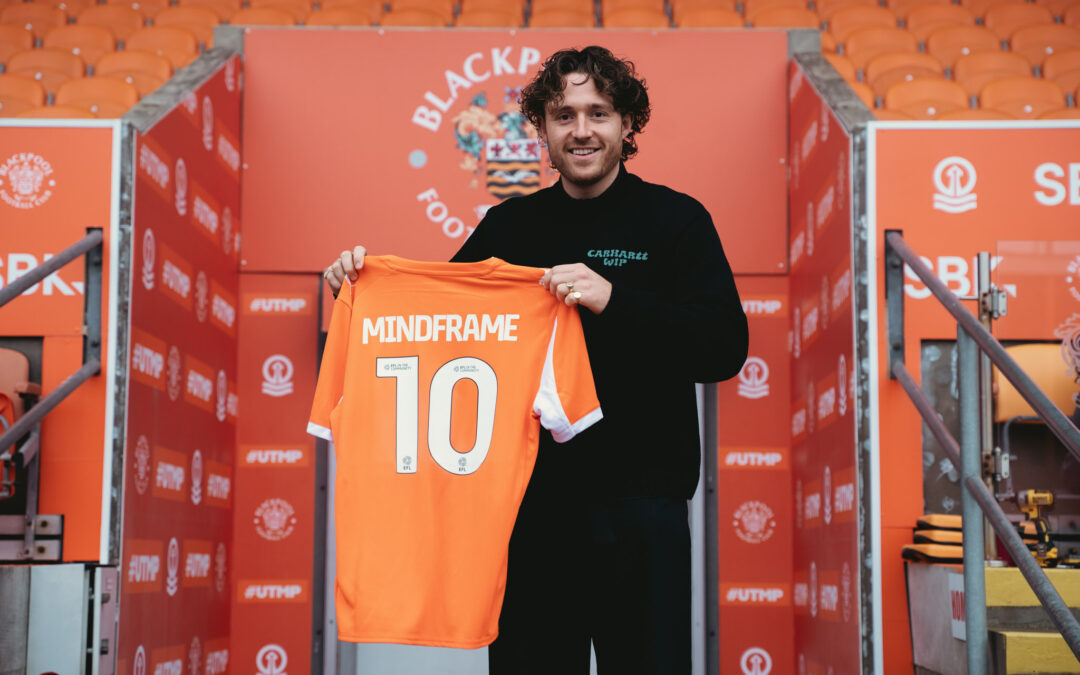
They even gave me a shirt with Mindframe on the back. A small thing, but it sums up how the partnership feels. We are not an outside supplier they tolerate. We are part of how they develop their players.
What this means for other clubs and academies
What we built with Blackpool we can build anywhere. A club that wants its young players to handle pressure, recover from mistakes, carry confidence into games and come back stronger from injury does not have to leave that to chance.
We work with academies, first teams and clubs across the UK and beyond, with a team of 17 practitioners who have supported over 2,500 athletes across 80 plus sports. We are a team of HCPC registered Sport Psychologists and practitioners who follow supervised practice in line with BPS and CASES guidelines, which brings the mental side of the game up to the standard of everything else a serious club already invests in.
Frequently asked questions
Does Mindframe work with football academies?
What does sport psychology do for academy footballers?
Which clubs has Mindframe worked with?
Can individual academy players get one to one sessions?
Can sport psychology help football coaches, not just players?
Are Mindframe's sport psychologists qualified?
Summary
Blackpool FC wanted to give its academy something consistent for the mental side of the game. We delivered workshops for players and staff and one to one sessions for individual players, focused on confidence, pressure, mistakes, performance anxiety and injury. The result has been professional contracts, players moving up to the first team, a strong FA Youth Cup run and consistently positive feedback.
If you run a club or academy and want the mental side developed to the same standard as everything else, get in touch with our team. You can read more about sport psychology for football or about the team behind Mindframe.
Ready to transform your mindset?
Take your game to the next level and fulfil your potential
Get in Touch
"My only regret is not doing this years ago"

Mark
"Gamechanger - Felt like I was cheating"

Luke
British Steeplechase Champion 2023 - “Instrumental in my success"

Poppy Tank
Won the Clutch Pro Tour Order of Merit - “My golf has reached a new level”

Giles
Won the National Championships - “Helped transform my life”
